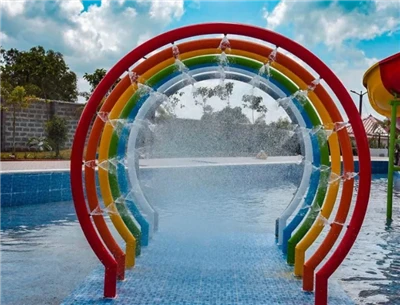


Water is the source of life, and human life and production are inseparable from it.
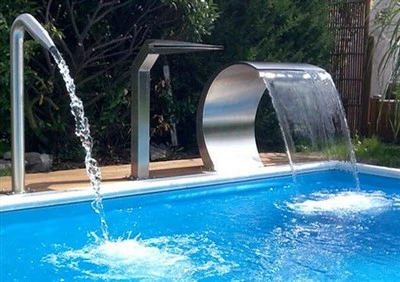
The original meaning of fountain refers to the spring water that is sprayed from underground to the ground, while in modern people's concept, fountain specifically refers to artificially manufactured water spraying equipment. Here, the author will explore with everyone the art and development of the sculpture of stone fountains.
Traditional fountains use artificial water pressure to achieve the effect of spraying, and do not pay attention to the shape of the fountain itself, only focusing on the spring water sprayed. With the continuous development of society, people can easily achieve spraying by using various power devices, thus turning their focus to the fountain itself. From simple or even shapeless fountains to the present day, various works with different shapes and production techniques have emerged.
In many cultural landscape scenic spots, parks, and residential areas, there are stone carved fountains as decorations. However, what role and significance can these stone carved fountains play in cultural landscapes? Stone carved fountains are a type of sculptural form, mainly placed in the center of the park, especially at the entrance, symbolizing wealth rolling in like flowing water.
Physically speaking, the fountain is no longer hidden within the spring water, but protrudes from the water surface, serving a good decorative purpose with a certain shape. From one or two floors to three or more floors, the fountain is getting higher and higher!
From a decorative perspective, fountains are no longer just "fountain" fountains. Designers decorate the fountain itself with various decorative objects (such as characters, animals, etc.), thus forming a variety of fountain works. Among them, Western character fountains and animal fountains have become the most common works on the market.
Of course, design is not a fixed layer, and the shape of the fountain is not just evolving in complex directions. Under the guidance of modern design concepts, simple fountain shapes have also emerged as a new trend that modern people are particularly fond of. A minimalist design is a representation of fashion, elegance, simplicity, and not being sloppy, and it is also the modern pursuit of returning to simplicity.
1. Make the already beautiful environment shine even more
Stone carved fountains are often used to beautify the environment. In this type of sculpture, there is usually a strong solution to impact, combined with the form of water spraying, making this type of sculpture blend well with the surrounding environment, making the surrounding environment suddenly beautiful.
2. The finishing touch in the garden has become a place for everyone to take photos
If you encounter a fountain themed garden or park, then stone carved fountains combine sculpture art with humanistic knowledge, making the entire garden full of artistic and cultural atmosphere. It is also a place where many people choose to take photos.
3. Bringing benefits to people's physical and mental health
Especially placing a stone carved fountain in a square with excessive crowd flow will instantly provide a quiet place for the entire noisy square. Especially in the long and hot summer, placing a stone carved fountain in the middle of the square can give the walking crowd a cool feeling.
4. The function of gathering wealth and warding off evil spirits
Many times, stone carved fountains can be seen at the entrances of large shopping malls and some residential areas. In addition to their beauty, they also have the function of blocking evil spirits and gathering wealth.
The significance of stone carved fountains
1. Fountain in ancient civilizations brought significance to drinking water
The significance of fountains originated from ancient civilizations, where water reservoirs were generally established in cities to ensure sufficient drinking water during future droughts. In ancient civilizations, cities used water pipelines to transport water from reservoirs to various cities, and of course, gravity was also used to spray the water out. So the form of fountains had already appeared in ancient civilized cities, but at that time it was only used to transport drinking water.
2. Expressing the pursuit of life through artistic forms
As early as the Renaissance, Europe mainly used sculpture or decorative methods to rebuild fountains in some public buildings. Until the Industrial Revolution, the purpose of using fountains as drinking water was diluted, so today's stone carved fountains have the significance of beautifying the environment and decorating the surrounding environment. In addition, it can also cool the ground during hot weather.
3. Purifying the air and adding fun to life
Nowadays, many cities have built stone carved fountains in the center of their squares, which not only showcase the charm of the city but also purify the surrounding air quality. This not only beautifies the environment but also adds to the people's enjoyment of life.
In short, stone carved fountains not only serve as decorative elements for the environment, but also have cultural display significance. On the premise of bringing decoration to the surrounding environment, one's own development also integrates into the surrounding environment, making the garden full of cultural heritage more dazzling. At the same time, many people believe that fountains can ward off evil and gather wealth, thus endowing them with a mysterious aura and giving them a stronger sense of existence.