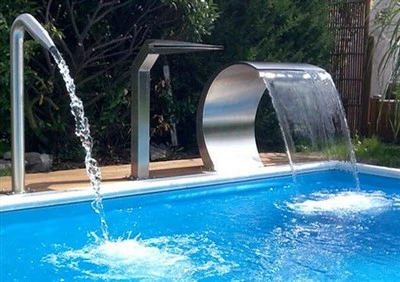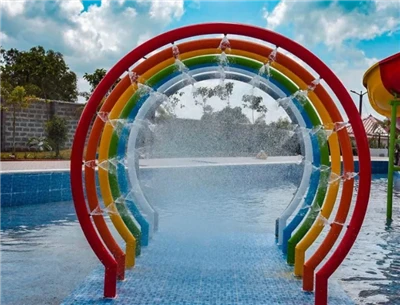


Fountains have become a dynamic part of cities and an essential part of garden landscapes. Fountains are often used in conjunction with sound and light effects, and come in various forms, from city squares to street communities, from public places to private gardens. Do you understand the types of fountains? What are the functions of fountains seen in gardens? Below, the editor will provide a detailed introduction to the crackdown.
I. Classification of fountains
1. A regular decorative fountain is a fixed fountain composed of various floral patterns.
2. The landscape is composed of fountains combined with sculptures.
3. Water sculptures are created by artificial and mechanical means to create various large water column postures, forming landscapes.
4. The self-control fountain utilizes electronic technology to control water, light, sound, color, etc. according to the design program, forming a strange and changing landscape.
5. In addition to the above types, other types include high fountain, dry fountain, folded spring, music fountain, running spring, jumping spring, floating spring, sketch spring, artistic spring, music running spring, etc., and unique waterscape can also be formed through spray.
II. The role of fountains in gardens
1. Auxiliary role
A. Landscape architecture requires water, and garden design and construction require the use of the five elements of metal, wood, water, fire, and soil.
B. If there is no water, then the five elements are incomplete and have a significant impact on the garden.
C. Some gardens are not suitable for building lakes or small water pools during production, so there is no water left. Fountain can achieve water use, and the installation and use environment of fountain does not have significant environmental requirements. In this way, the actual value of use is highlighted.
2. The role of beautifying the garden environment
A. As large outdoor decorative displays, rockery fountains and rockery waterfalls are more vibrant and charming than any other display.
B. Rockery fountains and waterfalls can change the monotonous and unchanging environment; The flowing water, flowers, and colorful lights complement each other, making these spatial scenes new, full of vitality, and giving a wonderful feeling of entering a fairyland.
The 30 fashionable flowing fountain can create an ideal living environment that belongs to modern style, personalization, and noble leisure.
3. The role of adding fun to life
The slow flow of water is pleasing to the eye, and the murmuring sound of water soothes the body and mind Smart and enjoyable people shrink this natural landscape and create it in public places such as courtyards, community squares, and resorts, which not only entertains and nourishes the mind but also adds to the fun of life.
4. The function of purifying the surrounding environment
A. The flowing fountain can continuously generate a large amount of negative ions. The small water droplets in the fountain collide with air molecules, producing a large amount of negative oxygen ions, further eliminating floating positive ions, odors, and harmful dust in the air, adsorbing carbon dioxide and electromagnetic radiation released by household appliances, making the ambient air fresher.
B. Being in a negative ion environment will make you feel relaxed and energized! A flowing fountain can regulate indoor humidity and temperature, improving environmental air quality.
5. The role of Feng Shui
A. Feng Shui promotes wealth and strengthens a beautiful career in life. With flowing water and abundant wealth, the continuous flow of water enhances the vitality and energy of your work and life space. Combined with the application of metaphysics, it makes your work and life full of beauty, accompanying you with good luck at all times, and filling your soul with joy and wealth.
B. A gentle stream, emitting a tinkling sound, is a flowing music and a vivid picture. It not only gives people a sense of returning to nature and extraordinary comfort, but also brings good luck and longevity.