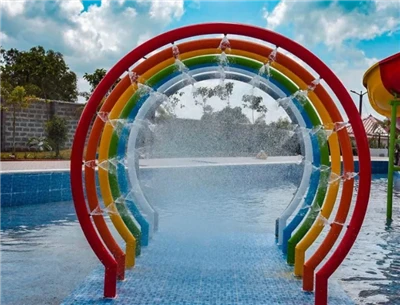


Biological treatment method for water quality of fountain equipment
The ecological method uses a "natural treatment system" composed of water, soil, sand and gravel, microorganisms, higher plants, and sunlight to treat sewage, which is suitable for restoring its original appearance according to the laws of nature. This restoration method has unique advantages in the treatment of eutrophic water bodies.
1. Biological manipulation and algae control technology
Biological manipulation is the use of the principle of food chain uptake in ecosystems and the symbiotic relationship between organisms to improve water quality and restore ecological balance by altering the structure of the biological community in water bodies. There are actually two ways to achieve this: releasing filter feeding fish to ingest algae, or releasing carnivorous fish to reduce the number of fish that feed on plankton, thereby increasing the population of plankton. In practical applications, biological manipulation is difficult to operate
The degree is high, and the conditions are difficult to control. The feedback mechanism between organisms and the influence of viruses can easily cause the water to return to its original turbid state dominated by algae.

2. Aquatic plant purification technology
Higher aquatic plants and algae are both primary producers and competitors in terms of nutrition, light energy, and growth space. The allelopathic substances secreted by their roots also have inhibitory effects on the growth of algal cells. At present, the aquatic plants that have been extensively studied include reeds, water lilies, cattails, and algae. The development of floating bed planting technology provides a new idea for the treatment of eutrophic water bodies. This technology uses a floating bed as a carrier to plant higher aquatic plants on it. Through the absorption, adsorption, allelopathic effect of plant roots and the decomposition and mineralization of rhizosphere microorganisms, it reduces nitrogen, phosphorus nutrients and organic matter in the water, inhibits algae growth, and purifies water quality. The use of aquatic higher plants to construct artificial composite vegetation has unique advantages in the treatment of eutrophic water bodies, but attention should be paid to preventing excessive growth of large plants, which can transform algae lakes into grass lakes, accelerate lake siltation and swampification, and have a greater impact on water quality due to the decay of large plants during non growing seasons. Large aquatic plants also have a certain impact on the navigation of ships in rivers and lakes.

3. Artificial wetlands
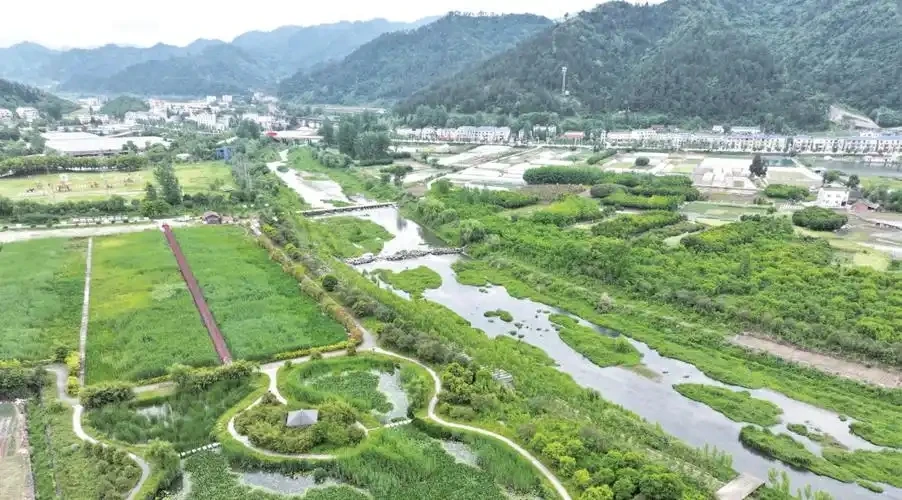
Artificial wetlands enhance the purification function of natural wetlands by utilizing a composite ecosystem of substrate, aquatic plants, and microorganisms for physical, chemical, and biological synergistic purification. Through filtration, adsorption, precipitation, plant absorption, and microbial decomposition, nutrients and organic matter are removed. Artificial wetlands occupy a large area, and the filling layer is prone to blockage and compaction, which limits their application in urban landscape water treatment.
4. Stable pond
Stable pond, also known as oxidation pond, is usually a shallow pond with a depth of 1.0-1.5m, which treats polluted water through various aerobic, anaerobic processes and food chain treatments. Stable ponds have low operating costs, but they occupy a large area and have a long treatment cycle, making them suitable for landscape water bodies with nearby natural ponds that can be utilized.

5. Ecological Concrete Technology
Ecological concrete is a new type of porous material formed by filling and wrapping around coarse aggregates with cementitious materials. It overcomes the disadvantage of traditional concrete slope protection that vegetation cannot grow. The continuous pores are suitable for plant root growth and microbial attachment, thus having ecological purification function. With the development of urbanization in China, the promotion of ecological city construction, and the enhancement of residents' environmental awareness, the importance of water features is becoming increasingly prominent. Water feature water treatment will become another new field of sewage treatment after domestic sewage, industrial sewage, and watershed pollution control.

At present, various treatment technologies for landscape water bodies have their own advantages, disadvantages, and applicable scenarios. Only by selecting treatment processes reasonably according to the actual situation, optimizing and combining different technologies, complementing each other's strengths and weaknesses, and giving full play to their respective advantages, while implementing strict external pollution interception measures and management systems, can we achieve fundamental treatment and effective maintenance of water landscape bodies, and create a good ecological environment for residents' lives and urban development.